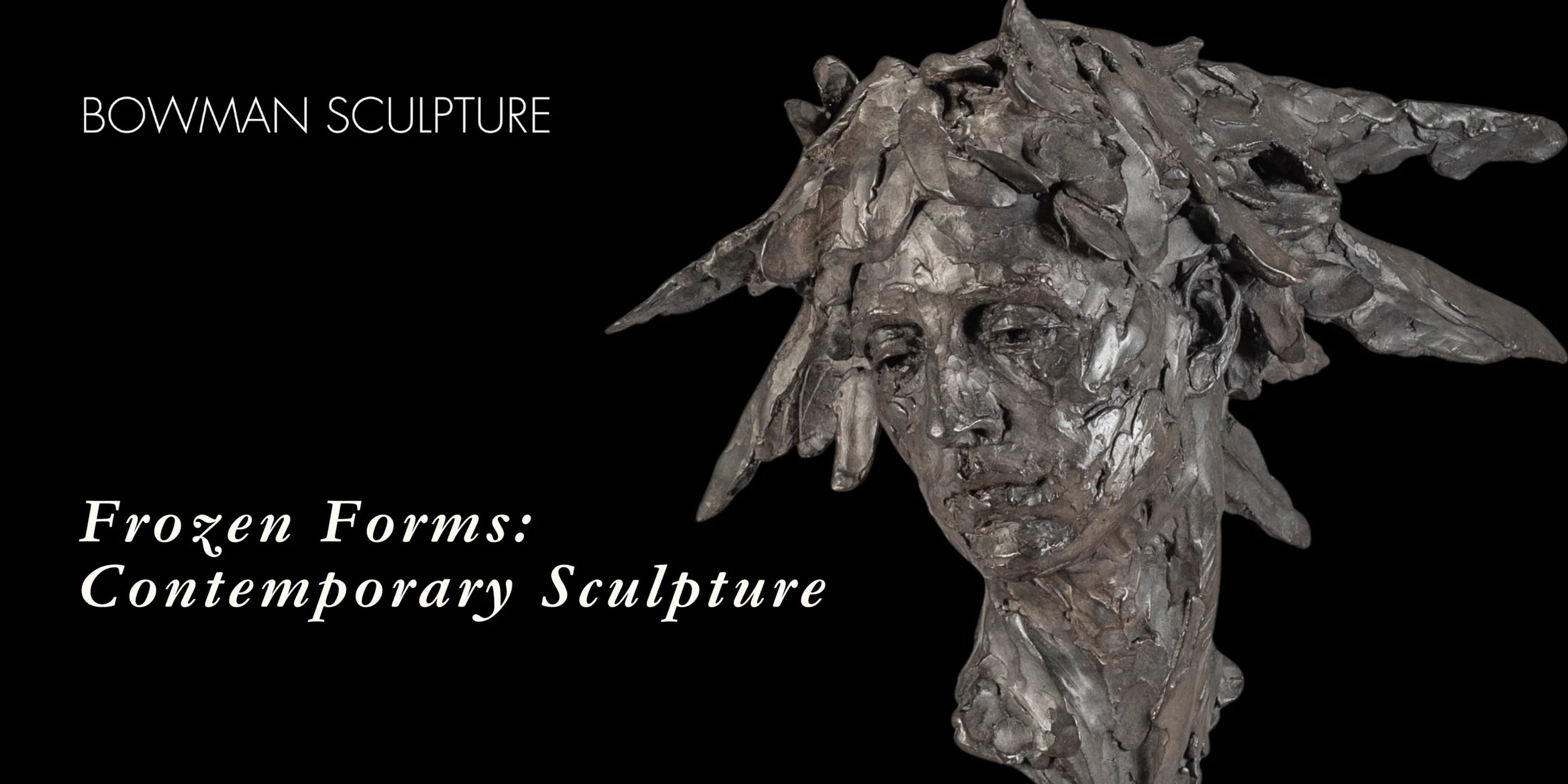
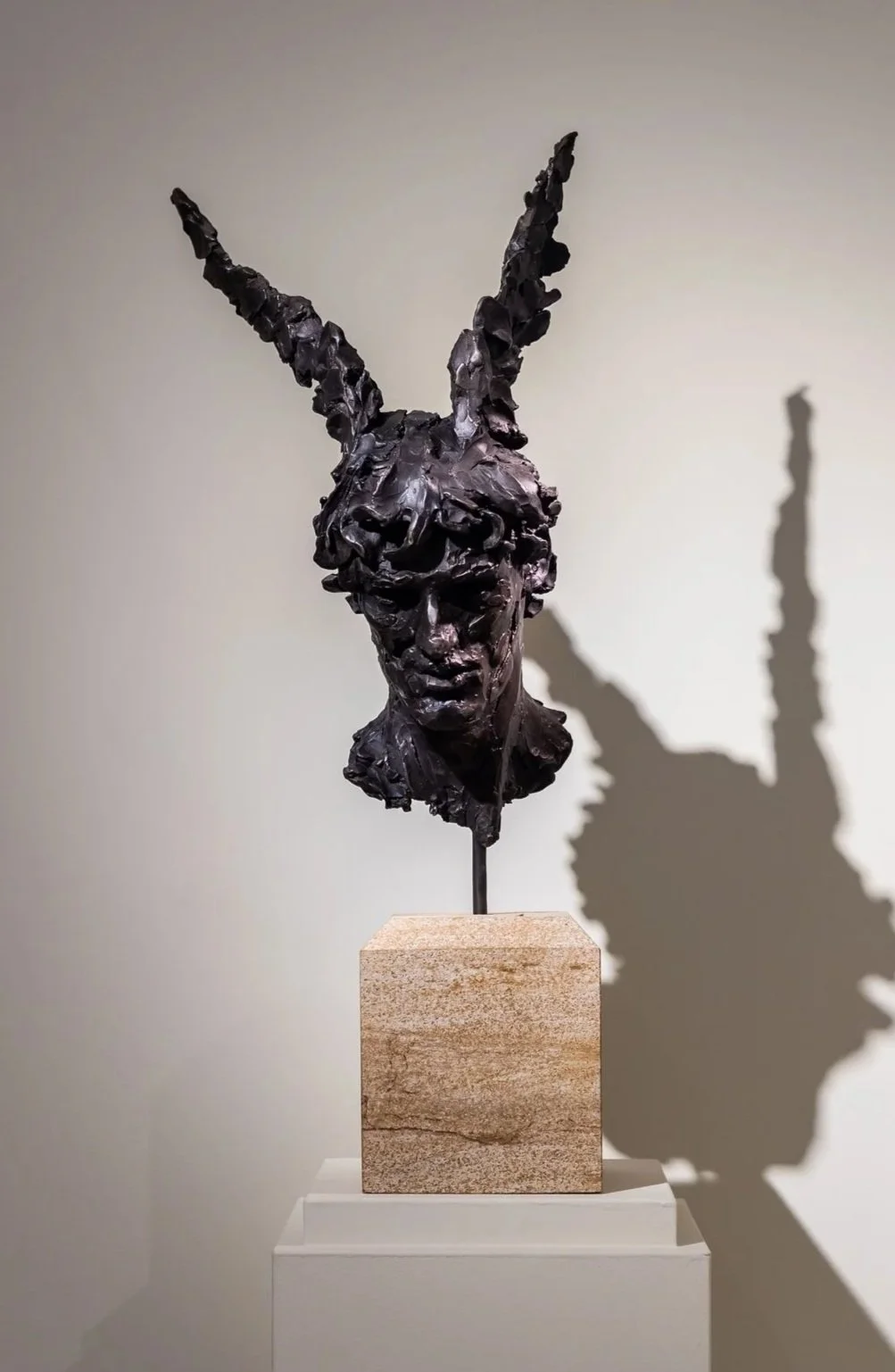
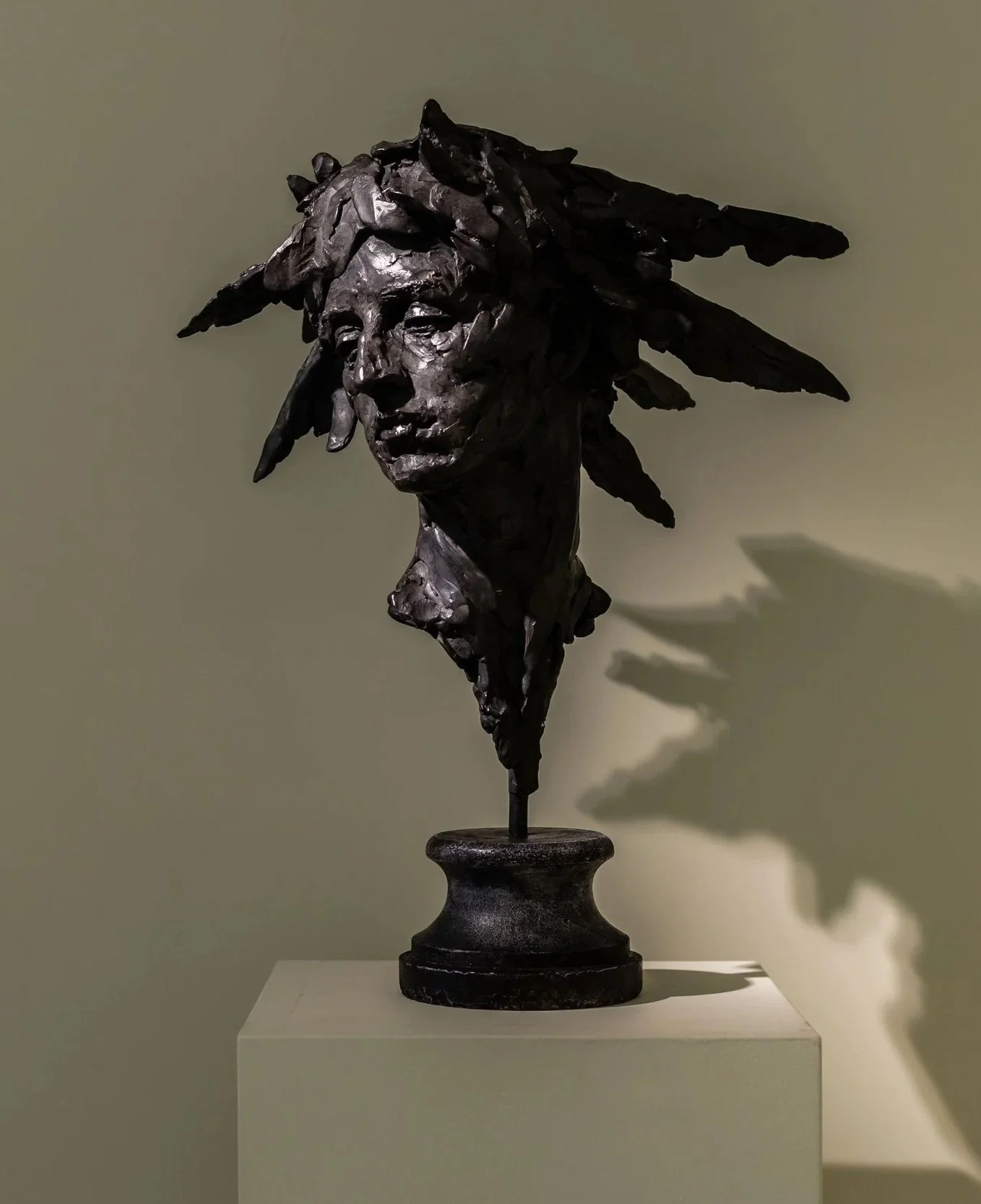
The sculptures of ‘Lucifer’ and ‘Sin’ from Paradise Lost, an ongoing series focusing on Milton's Epic. For pricing and more information about these works, please contact Bowman Sculpture.
Rufus Martin is an award winning British sculptor working primarily in clay, bronze, and marble. Largely self-taught, his formative years were shaped by an environment steeped in portraiture, which cultivated his enduring fascination with people and their place within contemporary, historical, and mythic narratives.
Martin’s sculptural journey began with early experiments in hammered steel and wax, but it was through clay, and specifically his first bust of his late mentor Michael Howells, that he found a medium capable of bearing the emotional weight of an individual. Each sculpture becomes, for him, a vessel of individual sensation, a conduit between sculptor and subject.
“One has to pick up the clay and, in a way, pick up a piece of the person sitting in front of you; all their sorrow, pain, beauty, sensuality, strength and fear, moulding that clay in your hands you mould them with bits of your self and by placing the clay in its correct place you attempt to place that precious sliver of spirit that the sitter has given you into the sculpture”
Drawing every day without fail, Rufus’ intensity and fury of gesture are often reflected in the raw surface of his sculptural works. His work balances immediacy with measured observation, often praised for capturing not only a striking likeness but the interior life of his subjects.
While clay remains central to his practice, a recent scholarship from the Queen Elizabeth Scholarship Trust enabled him to train in marble carving in Florence. This experience deepened his understanding of reductive processes and revealed surprising parallels with his additive clay work, each medium now informing the other.
In recent years, Martin’s work has expanded from real people toward gargantuan figures of epic poetry. Inspired by texts such as Milton’s Paradise Lost, his sculptures seek to evoke the same timeless gravity, drawing on the universal human truths found in myth and verse. Through this lens, portraiture becomes more than documentation; it becomes reflection: of sitter, sculptor, and viewer alike.